



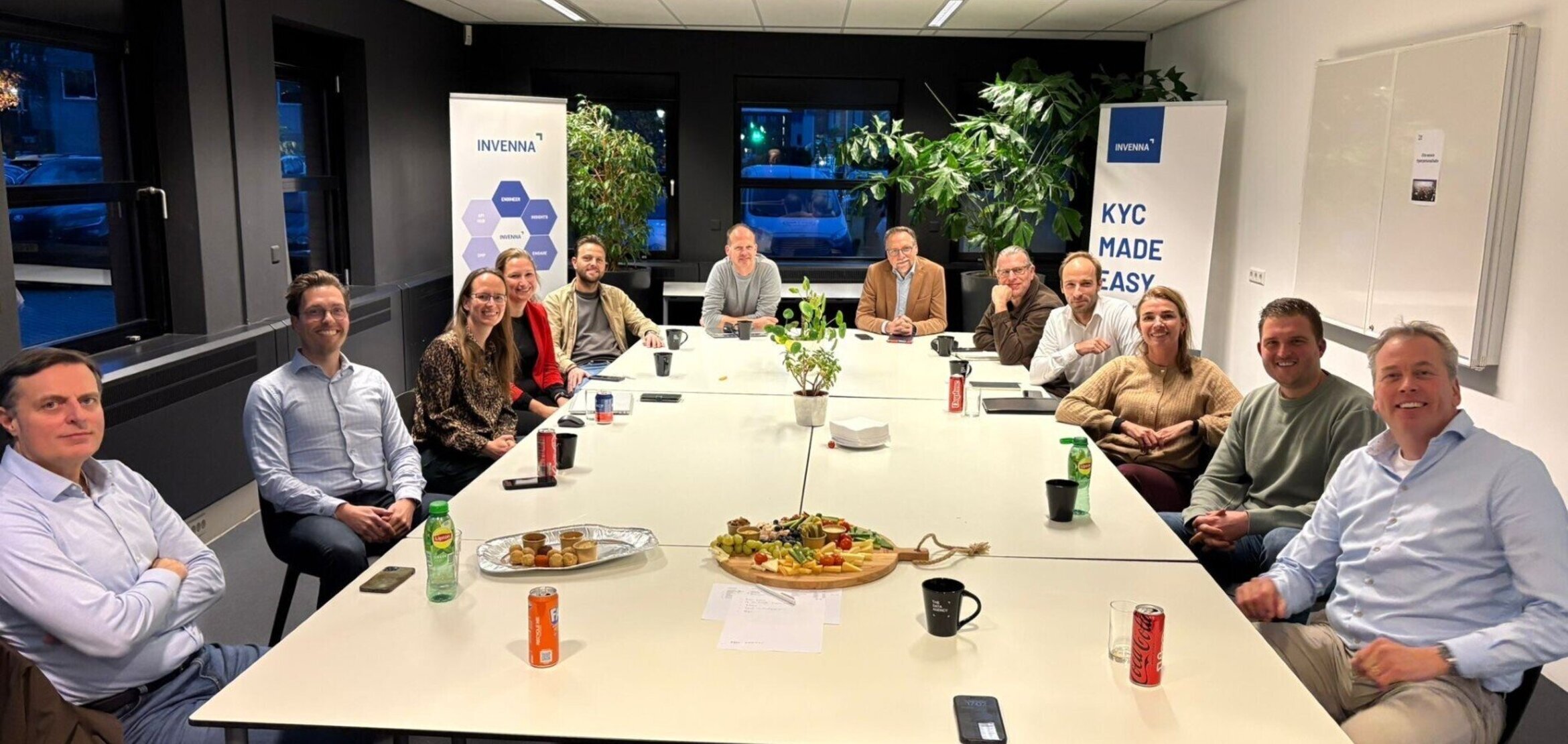
We had an incredibly enjoyable roundtable on (hyper)personalization. The success of sessions like this hinges entirely on participant engagement—and in this case, it was outstanding.
We began with the question: what exactly do we mean by (hyper)personalization? For some, sending multiple email variants to different segments already counts as personalization; others go much further. But do we truly believe in fully one-to-one communication, or is that not always necessary? What is the value of personalization, and what challenges have we encountered—or are still on the horizon?
To keep the challenges manageable, we divided them into four familiar blocks: Data – Process – Technology – People. Interestingly, “people” was unanimously seen as the biggest bottleneck in delivering the right message, at the right time, through the right channel. Let’s go through the four components.
Data
Companies have enormous amounts of data. Sometimes it takes time to make new elements available, but more important is determining which data is truly relevant for your use case. Not everyone needs a complete 360-degree customer view; sometimes, for example, 270 degrees is enough. Context—what the customer is doing now—is highly valuable, but real-time data is not necessary for every organization or application. A clear data strategy and high-quality data are crucial: it’s better to have 50% reliable data than 90% questionable data. Mistakes undermine customer trust and, with it, the value exchange with the customer.
Process
You can work with A/B variants or with hundreds of pieces of (sub)content, both still manageable with business rules and models. It becomes more complex when you use GenAI to adapt content in real time. For true one-to-one communication, process automation and AI are indispensable. While many organizations are already experimenting, fully automated “lights-out campaigning” for contextual 1:1 communication is still a step too far for everyone. Some participants have experienced that leaving decisions entirely to technology still often results in inexplicable outcomes, meaning human oversight remains essential. Testing remains crucial for improvement. The latest technological developments make process automation increasingly accessible, so it’s never too early to start.
Technology
Companies often have a broad range of technologies that support personalization. This often results in some overlap in functionality. Participants agreed that tools and technology are indeed complex, but ultimately manageable with solutions like CDPs as orchestrators. Technology itself is rarely cited as the biggest challenge for personalization.
People
And that brings us to the biggest challenge: the human factor. Who truly feels ownership of the customer and decides what’s best for them? How do you prevent competing interests, such as sales targets overshadowing customer relevance? Do short-term commercial targets hinder customer satisfaction? Companies must balance what’s good for the customer with what’s good for the business—and that is not always easy.
Many organizations lack true central governance, or it has at least been a complex and lengthy process to establish. It doesn’t need to be one person, but there must be a structure in which shared principles are established: how important are customers to us? What does being customer-centric mean to us? How do we allocate commercial, service-oriented, and other communications? Central orchestration is a better term here: managing the right levers to balance customer and business goals while continuously monitoring customer expectations. The mandate for all customer contact must be centralized; decision-making authority should be consolidated to truly make it a success.
Returning to the question of what we actually mean by (hyper)personalization, we had engaging and recognizable discussions. Interestingly, the word “personalization” doesn’t always resonate. Terms like “relevance” or even “efficiency” often capture the idea better. If you are relevant, commercial opportunities naturally follow. It was also mentioned that personalization is not a goal in itself, but a means. And the term personalization should not be confused with customer satisfaction or customer-centricity. Many participants acknowledged that when it comes down to it, financial results ultimately take precedence over customer-centricity. However, personalization is broader than being customer-centric and can support both placing the customer at the center and achieving revenue goals. By linking personalization to the overall business strategy, all departments understand its contribution. One participant summarized it well: personalization is a marathon, not a sprint.
And it’s now clear that personalization and relevance deliver value. Hence our punchline: “Relevance is not a marketing choice, it is a financial strategy.”
In short: central orchestration is not only desirable but also technically feasible. There is plenty of data to guide the process, and processes can be organized. What remains is the human factor. People must align priorities, generate enthusiasm, and demonstrate value. And for the change-oriented marketers among us, it truly is a marathon.
So let’s put on our running shoes together.
'Relevance is not a marketing choice, it is a financial strategy'

Every organisation has valuable data. however, not everyone makes optimal use of it. We help organisations increase their return on data, in every phase of the customer journey.
Wondering how? Feel free to download our 10 most important takeaways.